Fjalgârn
Contents
 Elárin
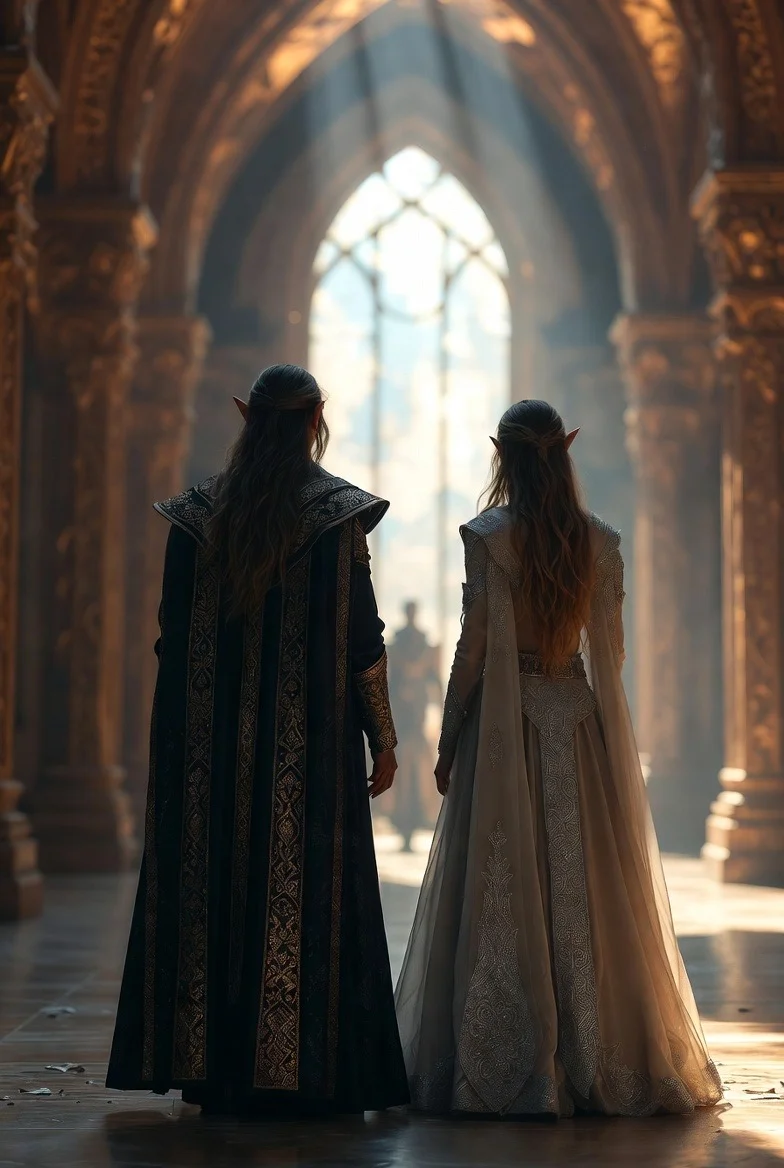 Elves
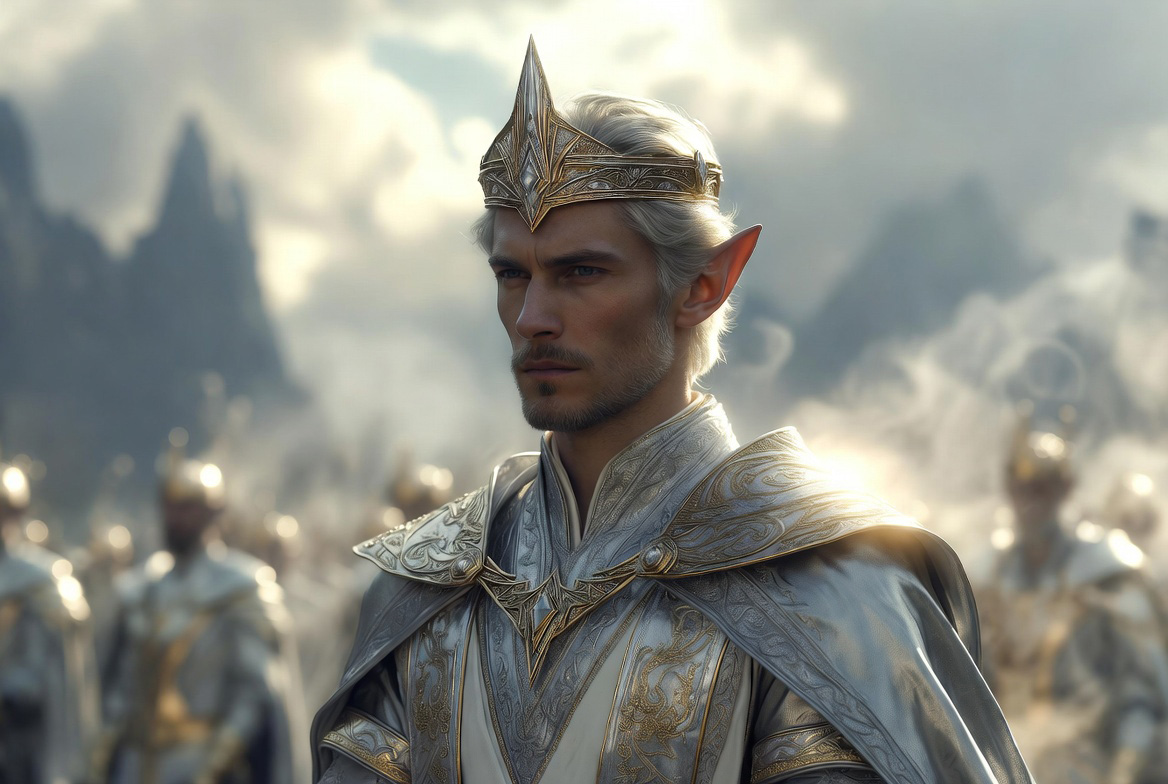 High King Kian Pribhos
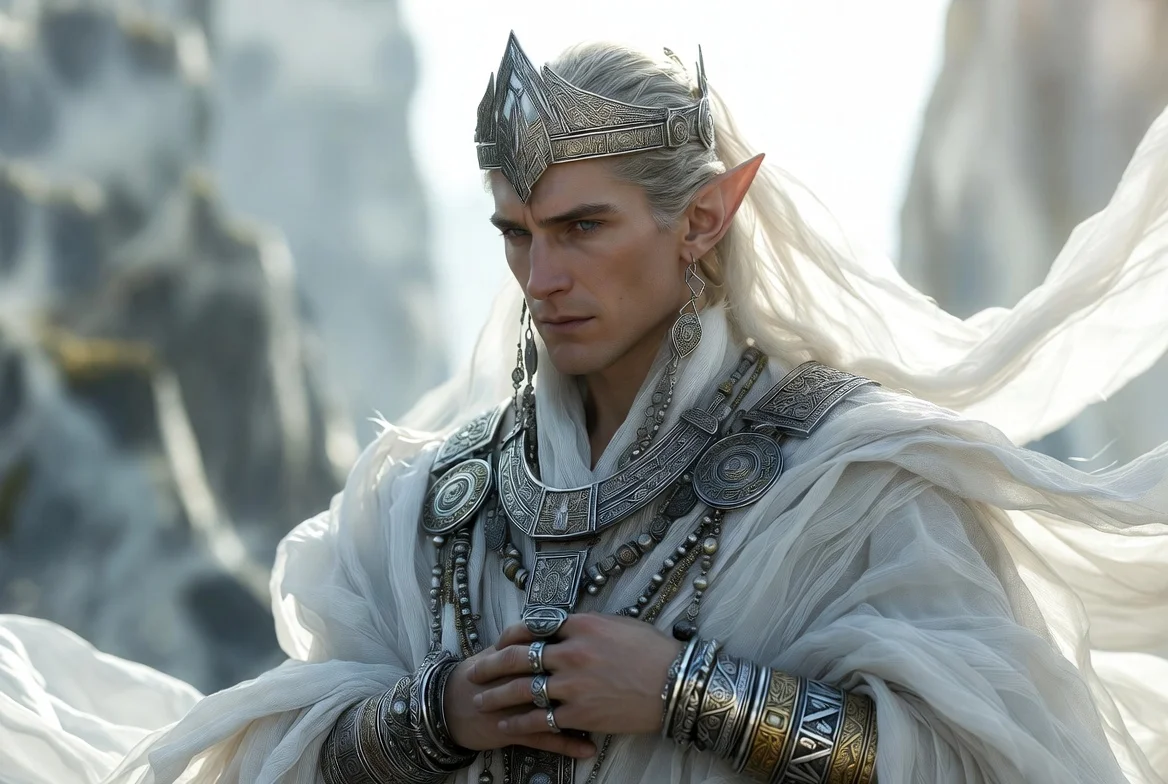 High King Sepiun
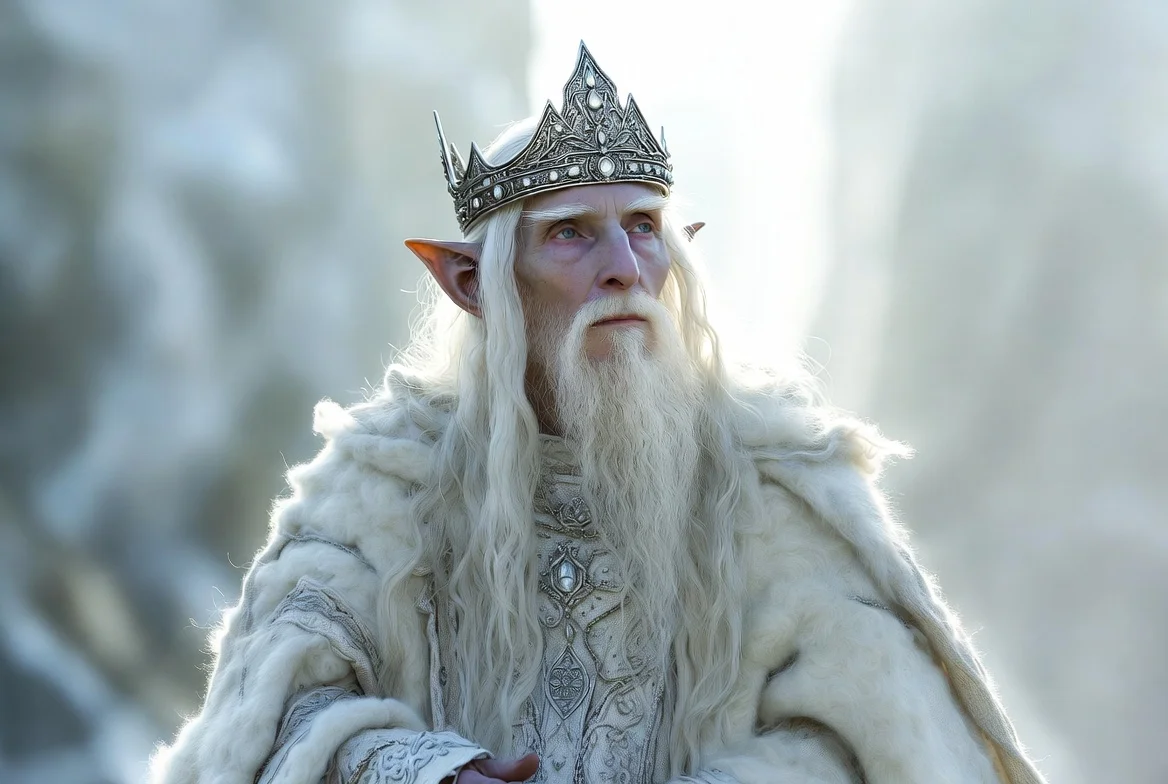 High King Erral
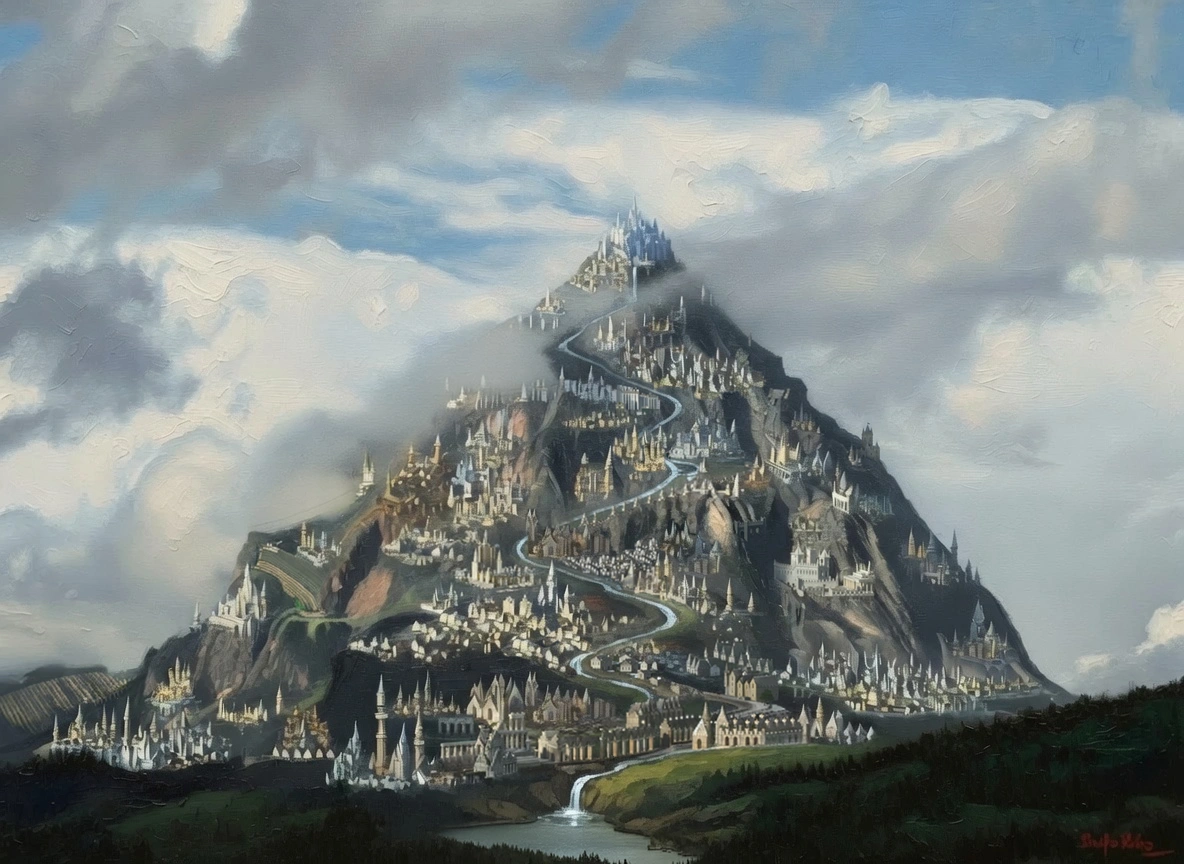 Manh Hélbed
 HalmréaAinlenTalalMedhrasElárin
Overview
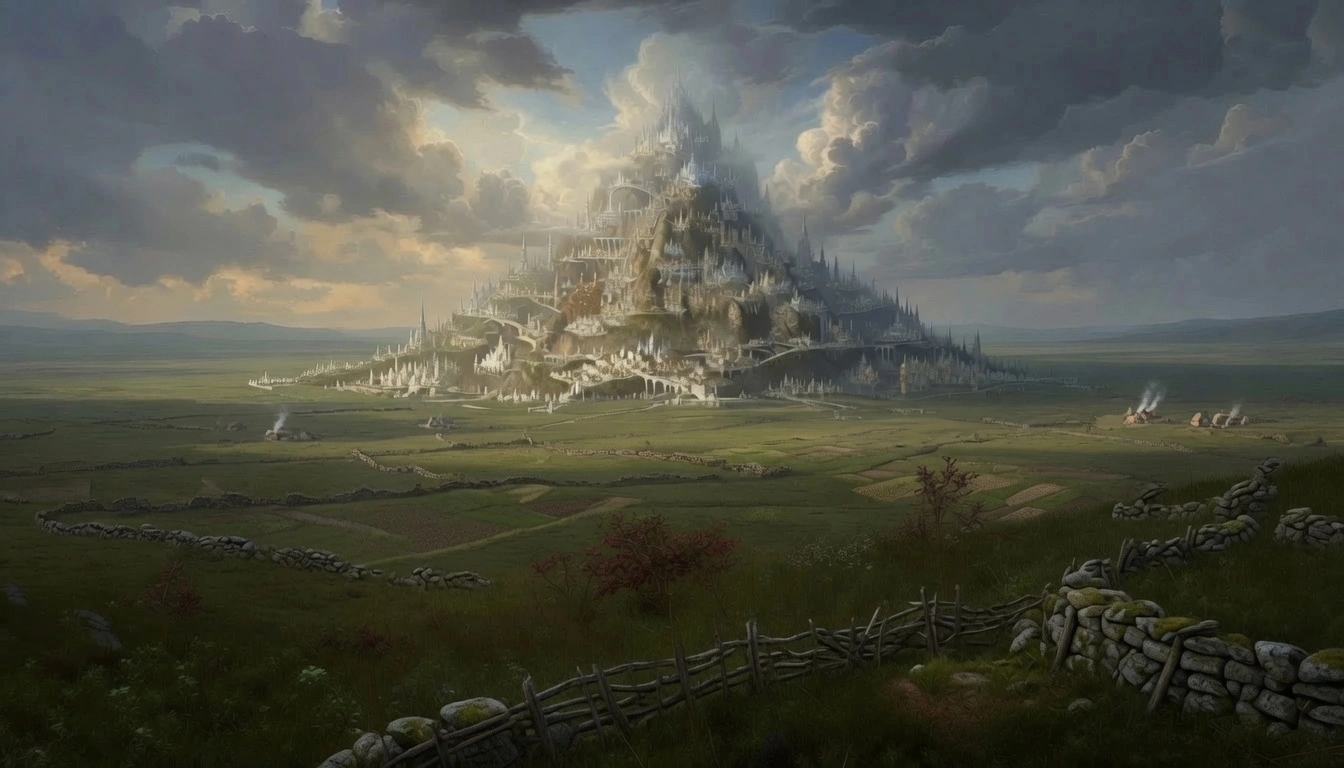
Fjalgârn is the ancient, sovereign kingdom of the elves, stretching across the heart of the continent of Ered. It is an empire defined by its geographical isolation, a rigid vertical caste system, and a deep-seated spiritual devotion to the god Thélan, particularly in the person of Vira. The entire kingdom centers around the titanic peak of Manh Hélbed, whose constant, low-frequency magical hum serves as the literal and cultural pulse of elven civilization.
Geography of the Sovereign Elven Realm
The territory of Fjalgârn is defined by an intricate interplay of natural river barriers, a massive central mountain structure, and a fiercely contested lowland frontier.
The River Moat: Seqrial and the Eilran System
The geopolitical heartland of Fjalgârn is Seqrial, also known historically as the Land of The Two Rivers. This region forms a flawless natural moat, defined by the Gharan (East River) and the Bharan (West River) which wrap around the kingdom's core. To the north, these twin rivers converge to birth the Nyr-Eilran, while to the south, their junction forms the Thyr-Eilran. Together, this continuous, continent-spanning Eilran waterway completely bisects Ered from north to south. While nearly the entirety of Fjalgârn lies protected within the cradle of Seqrial, the frontier city of Kuathelhen stands as a lone exception, sitting isolated east of the Gharan.
The Mountain Realm: The Five Vertical Regions of Manh Hélbed
At the center of Seqrial rises the titanic spire of Manh Hélbed. The mountain functions as a vertical caste society, where social status, luxury, and authority elevate alongside the terrain:
Elárin (The Summit): The upper third of the mountain. Walled off from the lower slopes, this crystalline pinnacle is the sacred sanctuary of the immortal Khelhanâ (or Níntil) lineage. Here, the High King rules adjacent to the Holy Fountain of Vira, where the water of life flows.
Medhras (The Middle Slopes): The middle third of the mountain, serving as the home of high-ranking nobility, priests, and the kingdom's administrative elite. It features the regional capital Paraduar, renowned for its Paraduar-Aede temple, mountain bread, and potent ale.
Talal (The Lower Slopes): The bottom third of the mountain, populated by merchants, tradesfolk, and the vast majority of the elven citizenry. It is the bustling commercial engine of the peak.
Adinferdh (The Center): Located entirely within the hollowed-out interior of the mountain core. This massive, subterranean metropolis is populated by working-class miners and low-caste outcasts who tend to the realm's deep industrial infrastructure.
Grondelen (The Foothills): The lowermost region at the direct base of the mountain. Comprising plains and lowlands, it is occupied by common laborers, agricultural projects like the garden-city Filnolór on the eastern slopes, and the fortified gateway city of Grondelen.
Ainlen: The Border Foothill Region
Beyond the immediate elven settlements of the lower mountain lies Ainlen, the collective name for the broader foothills and plains surrounding Manh Hélbed within the river boundaries. This peripheral landscape is divided into four major territories:
Wofmul in the west and Deralhar in the north, regions characterized by rugged approaches and defensive outposts.
Grondelen in the south and the highly fertile farmlands of Halmréa in the east.
Because Ainlen bridges the gap between the isolated slopes of the elven mountain and the wider continent, it has historically been a volatile melting pot. It served as the primary homeland for human and dwarven populations prior to the imperialistic expansions of High King Sepiun, making it the bloodiest battleground in the kingdom's history.
The Great Capitals and Cities
Fjalgârn is anchored by seven major urban hubs, each serving as a spiritual pillar tied to the Alhanic Calendar and overseen by one of the seven appointed Altharnil priests:
Elárin: The crystalline capital city at the summit, represented by the high priest Halaghar.
Paraduar: The grand capital of the Medhras region, famous throughout Ered for its signature mountain bread, potent ale, and the magnificent Paraduar-Aede temple.
Sinvél: Located on the northern central slopes, it is the artistic capital of the kingdom, dedicated to preserving elven music and traditional arts.
Filnolór: The "City of Gardens" on the eastern slopes, acting as the agricultural lifeblood of the mountain through high-altitude terraced farming.
Adinferdh: A massive, sprawling subterranean metropolis inside the mountain core where thousands of working-class elves reside.
Grondelen: The heavily fortified gateway city located in the foothills, standing as the kingdom's primary first line of defense.
Kuathelhen: Located east of the river moat, this frontier city was originally established to house half-elf outcasts who were forbidden from living on the holy mountain.
A History of Dominion and Conflict
The Primordial Era (Early First Age)
In the opening centuries of the First Age, Dabh-ail-Ethil, Fjalgârn did not exist as an exclusive elven ethno-state. The Níntil—the first-created immortal beings sung into existence by the One High God, Thélan—were placed upon the slopes of Manh Hélbed to act as the world’s stewards. During this dawn period, the ancestors of all three major kindreds lived in absolute harmony. Kian Pribhos (father of elves), Ainan Skebhos (father of men), and Lean Têrbhos (father of dwarves) all dwelt together at the unassailable summit, drawing life from the Holy Fountain of Vira and maintaining the cosmic balance of Ered.
Tánn-lo-Boldún (3942 D.E.)
Late in the First Age, a catastrophic betrayal shook the sacred mountain. The traitorous angel Broro lured the three Níntil households away from Elárin with false promises of greater glory in the southern reaches of Ered, fully intending for them to perish in the wilderness. After enduring immense hardships—including the slaying of Lean’s wife, Erren—the deception was finally unmasked by the herald Rorl.
Upon their frantic return to the mountain, the leaders discovered that the dragon Boldún had descended upon the peak, burning its ancient forests and holding the remaining Kithil (dwarf-kin) hostage at the fortress of Thyrghaum. Desperate to reclaim their home, Ainan Skebhos fell to his knees at the prayer-shrine of Fendril, dug into the soil with his bare hands, and pulled forth the first runestone—the radiant blue gem Oqíthe. Wielding its blinding, divine power, the unified forces successfully routed Broro and the dragon. Following the victory, the three heralds of Thélan descended to curse Broro forever, openly proclaiming themselves eternal enemies of the Lord of the Dead.
The Murder of Pribhos
Driven to a flash of absolute rage by his older brother's choice to fence off the sacred summit region of Elárin from his human and dwarven brothers, Lean Têrbhos turned a heavy farming tool upon High King Kian Pribhos, striking him down. This first act of kinslaying left a permanent stain of blood upon the summit and shattered the fragile peace between the races forever.
The Great Dispersion (Mid First Age to Early Third Age)
The historical Dispersion of the Children officially commenced. Simmering tensions over access to the Holy Fountain and a growing resentment over elven dominance pushed the non-elven kindreds away from Manh Hélbed. While the elves fiercely claimed exclusive ownership of the holy mountain to guard their father's legacy, the other races initiated great migrations across Ered: Ainan Skebhos led mankind into the fertile central plains and northern wilds, while Lean's dwarves traveled to the farthest western outreaches of Ered to Aon and Bvag. This isolation fractured the continent, leaving the mountain as a bastion of elven ethno-nationalism.
The Enslavement of the Gnomes
The crown of Fjalgârn passed to Pribhos’ eldest son, High King Sepiun "The Merciless," whose long rule was defined by a burning hatred for the lesser kindreds. When an innocent gnome traveler named Ba'Xai accidentally revealed his presence on the western slopes near the boulder Baksabed, Sepiun captured him. He used the gnome to hunt down the free gnomes of Ered, bringing them to the mountain in chains to serve as a slave-people. Among many other projects, the enslaved population was forced to hollow out the mountain's interior to build the massive, low-class subterranean city of Adinferdh, while the magical mountain Strídail goats were forced into pens to serve as royal military mounts.
Olngirr-ine-Karrmaigh (4360 D.E.)
Seeking to test the limits of Oqíthe's power upon mortal minds, Sepiun established Karrmaigh, a brutal concentration camp in the foothills of the mountain. In 4360 D.E. (the closing year of the First Age, Dabh-ail-Ethil), a captive named Olngirr lay dying under the stone's torment while his companion Dín was beaten to death by elven wardens. In absolute anguish beneath the great oak Bhøtukh, Olngirr heard the voice of Thélan and overturned a rock, revealing the red runestone Ilderir ("Deliverance") fused to an oak root. The root transformed into a powerful staff, and Olngirr used it to shatter the stone walls, free the prisoners, and close the First Age—leading his people north to found Ilderrhem.
The Nakhanâ War (790–794 D.K.)
During the mid-Second Age, the barbarian Nakhanâ tribes of northern Fjalgârn united under warlord Gnatamend to launch a coordinated, four-year invasion. Aiming to seize the mountain and the immortal waters of Tobhrin, the tribes scaled the treacherous northern cliffs and burned the lower vertical villages.
The young elven prince Sepél, commanding Sepiun’s northern armies, mounted a fierce defense across the ledges. The elven military utilized royal Strídail cavalry to hold narrow passes during blizzards and unleashed the blinding light of Oqíthe to shatter the invaders' wooden siege towers. In the spring of 794 D.K., the conflict met its bloody end at the Battle of the Frozen Stair. Gnatamend was killed, his host was scattered into the winds, and total elven dominion over the mountain's northern face was cemented for the next many thousand years.
The War of Grondelen (113–131 D.T.)
Driven by an insatiable desire to expand elven borders and clear all of Seqrial of non-elves, Sepiun issued a decree in 112 D.T. demanding the immediate evacuation of all humans and dwarves from Ainlen. Most refugees gathered in the south under Ainan Skebhos and the dwarven House of Glod.
The War of Grondelen erupted in 113 D.T. and tore through the foothills for nearly two decades. In 123 D.T., Sepiun personally led a devastating assault at the Battle of Halmréa, killing Ainan's son Alewul in single combat, though Sepiun himself was severely wounded in the thigh by a dwarven bowman named Kûv. Elven forces occupied the foothills until 129 D.T., when an allied stand at Eloleare broke the elven momentum. By 131 D.T., Ainan's counter-offensives successfully recaptured the regions of Grondelen and Halmréa, forcing Sepiun into a permanent stalemate. To secure his remaining borders, Sepiun commissioned the Great Wall of Durrwyn in 142 D.T., physically sealing the mountain off from the rest of the continent.
The War Against Rhalûin (1109 D.T. – 7 D.M.)
Sepiun's isolationist pride left him vulnerable to the manipulations of Broro (now the dark lord Rhalûin), who seduced the king with promises of communing with his dead father. This allowed Rhalûin's shadow to spread across the south until Sepiun was assassinated by poisoned blades in 1071 D.T. His successor, High King Erral, immediately began the process of reversing the empire's isolationist stance, declaring a holy war in 1109 D.T. and unleashing elite gryphon-riders to break the aerial dominance of Rhalûin's dragons.
The conflict culminated in the Fourth Age during the grueling Seven-Year Siege of the southeast and the final, 21-day slaughter known as the Dabh-Nakhar ("Day of the Dead") in 7 D.M. When Rhalûin rose from the sea in a monstrous, titanic form, a massive host of northern giants led by the half-elf Njél pinned the dark lord to the shores. The divine Gabhanil emissaries rallied the runestone-bearers, channeling the focused light of Oqíthe, Ilderir, Bulkarthe, and Kerrain for a full hour until Rhalûin was entirely evaporated. To permanently seal the victory, the Gabhanil raised their hands to the southern horizon, lifting the dead realm of Ankilen into the sky to become the world's pale moon, bringing a weary but triumphant end to the war.
Etymology
Fjalgârn is an Elárinan name comprised of fjal (originally a slang word for mountain, lit. “sharps”) + gârn (“garden” or “realm”), essentially meaning “mountain realm.”