Tólgiran Felórir
Contents
 Men
 Mutraeníthor
 Líari
 Hérkhuen
 Ljósi
Qasseidh-gipad-ethene-Tólgiran
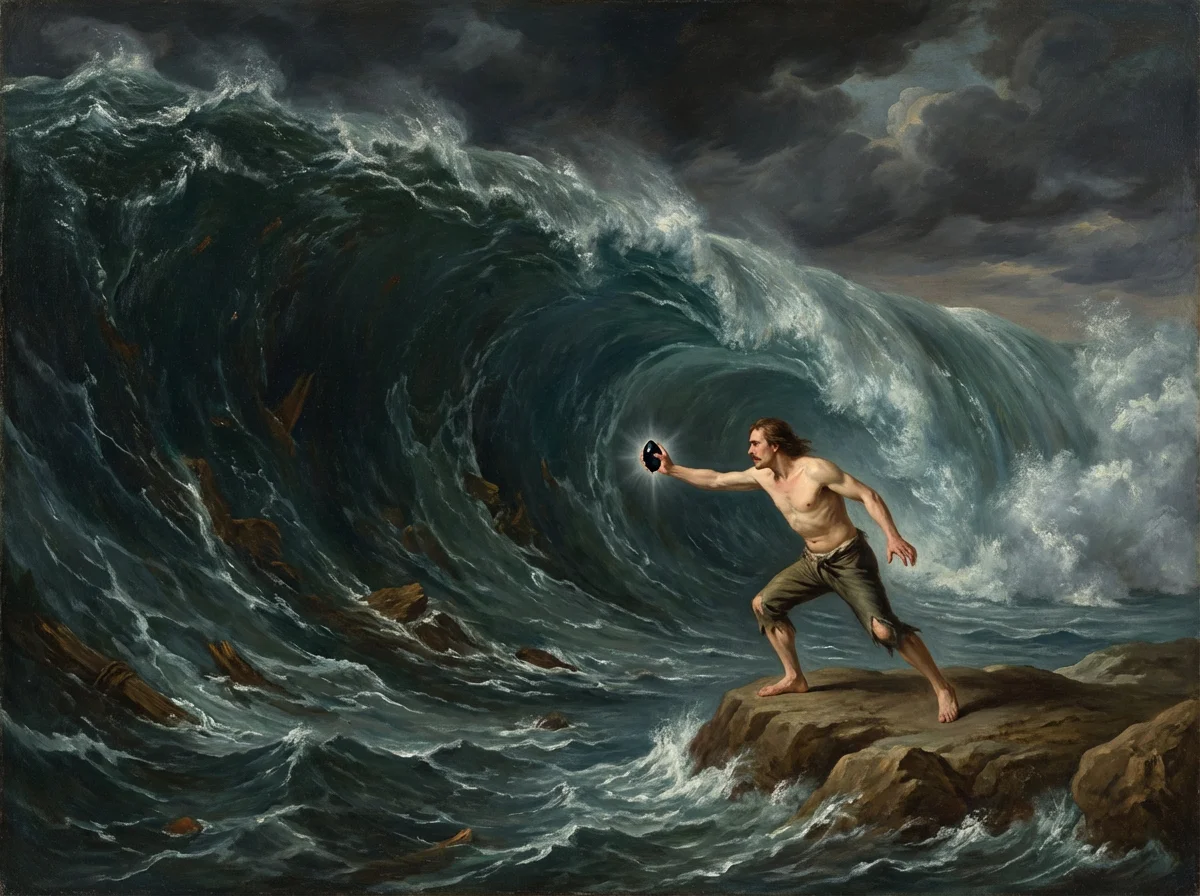
In 1745 D.M., when the Thyr-Eilran, Thasran, and Bulran rose in a single cataclysmic flood, the village of Irruba began to vanish beneath black water. Tólgiran, a young waterman of twenty-nine, clung to his collapsing roof as the current dragged him under. In the moment of death Thélan’s voice pierced the roar: “Reach beneath.” His fingers closed around a fist-sized shard of perfect obsidian—Cavusida—and the waters themselves obeyed his raised hand, parting like curtains and flowing harmlessly around the village. From that day the rivers knew his name, and the black stone bound itself to him, granting dominion over water and millenia of unnatural life. The famed story was named "Qasseidh-gipad-ethene-Tólgiran" by the elves.
Meeting Hérkhuen
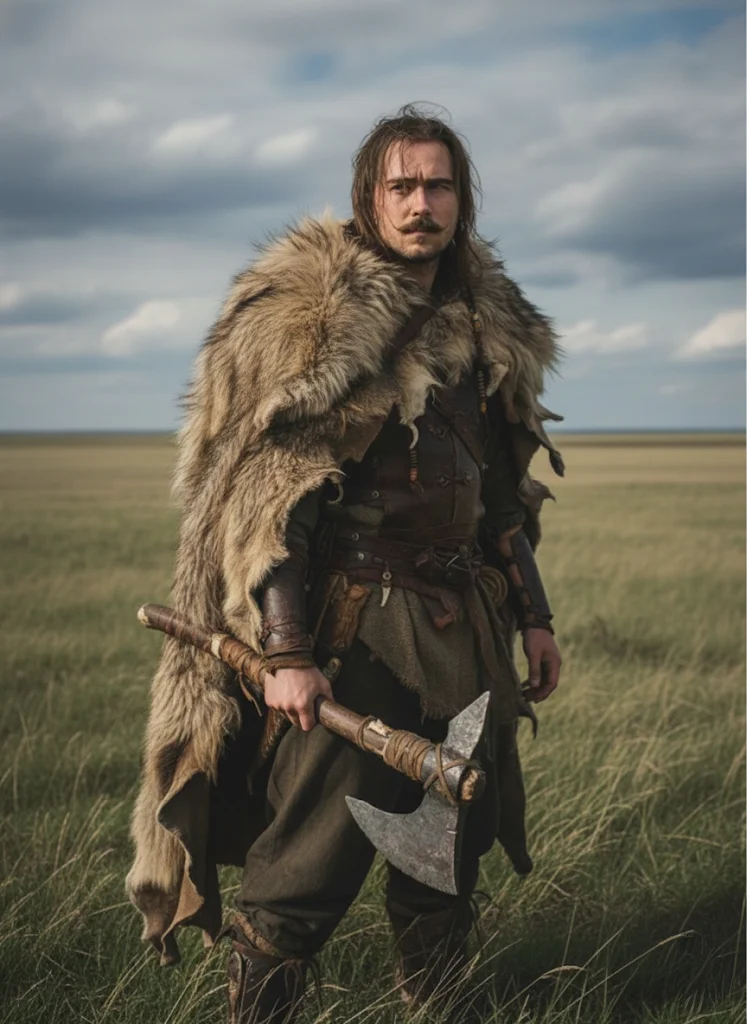
Cavusida’s gift of longevity turned Tólgiran into a wanderer of ages. For millenia he captained barges and warships up and down the great rivers, his songs becoming the heartbeat of Bulferdh. In one northern voyage up the Thyr-Eilran he docked at Wofmul, Fjalgârn and met Hérkhuen, an elf-maiden whose years matched his own. Their love was sudden and fierce, they married beneath vibrant stars in secret, and returned to Bulferdh, where their children carried both river-depth and starlight in their veins.
Joining Lady E’lana’s Secret Council
By the late Sixth and Seventh Ages, when Nêlaghar—Rhalûin’s half-elven son—raised turg armies to claim Elárin, E’lana the half-angel Lady of the Plains summoned Tólgiran to her hidden Council of Ainlen. Cavusida never left him, and E’lana declared, “Thélan keeps His own for reasons only He knows.” Tólgiran became her voice upon the rivers: ferrying secret emissaries, drowning turgish supply lines in sudden floods, and carrying word between scattered kingdoms. When the final war came, it was his black-sailed fleet that blocked Nêlaghar’s southern advance and bought the free peoples the time they needed.